
Friday, 21 February 2014

Thursday, 20 February 2014
Film Production Diary!
Film Production Diary
Day One
Originally, we were supposed to film our outside scenes, including the car scenes. But this plan soon went out the window, because every time we tried to film something, it was way too dark to film. So, this handed us a set back, but instead we just filmed the inside scenes. We only got a few scenes filmed, in the 3 hours of filming, however, we got a lot of different shots of the scenes, so we have a lot to choose from when it comes to editing. On this particular day we had to battle through some pretty cold temperatures, in a garage, so some of the time we couldn't film as our hands were rather numb.
During the filming process we had a few set backs, as on days we planned to film, we were let down by some members of the group, and so filming was cancelled.
Day Two
Today we had a lot to get through, and so we started earlier than the first day. We firstly filmed the rest of the inside scenes, as there were scenes that didn't look good, from our previous days filming. Once getting through the inside scenes, we had to film outside. We knew we were filming outside today, but none of us thought of checking the weather forecast, and so when it came to filming outside, we had the cameraman and his umbrella holding assistant. Although, this doesn't sound professional, we were able to film outside, and kept the camera completely dry. However, I do not recommend getting someone to hold the umbrella who, is easily distracted. Once getting past the rain obstacle, we managed to complete the filming. Another problem we had was the lines. Trying to get certain group members to remember their lines was almost a mission impossible. After many takes and much frustration, we got through this scene, and managed to complete the filming.
Although, we only used two days to film, which could make some people believe the film isn't good quality, we spent several hours filming both days, and also we made sure every time we shot a scene we had several shots, from several angles, before we moved onto the next scene.
Day One
Originally, we were supposed to film our outside scenes, including the car scenes. But this plan soon went out the window, because every time we tried to film something, it was way too dark to film. So, this handed us a set back, but instead we just filmed the inside scenes. We only got a few scenes filmed, in the 3 hours of filming, however, we got a lot of different shots of the scenes, so we have a lot to choose from when it comes to editing. On this particular day we had to battle through some pretty cold temperatures, in a garage, so some of the time we couldn't film as our hands were rather numb.
During the filming process we had a few set backs, as on days we planned to film, we were let down by some members of the group, and so filming was cancelled.
Day Two
Today we had a lot to get through, and so we started earlier than the first day. We firstly filmed the rest of the inside scenes, as there were scenes that didn't look good, from our previous days filming. Once getting through the inside scenes, we had to film outside. We knew we were filming outside today, but none of us thought of checking the weather forecast, and so when it came to filming outside, we had the cameraman and his umbrella holding assistant. Although, this doesn't sound professional, we were able to film outside, and kept the camera completely dry. However, I do not recommend getting someone to hold the umbrella who, is easily distracted. Once getting past the rain obstacle, we managed to complete the filming. Another problem we had was the lines. Trying to get certain group members to remember their lines was almost a mission impossible. After many takes and much frustration, we got through this scene, and managed to complete the filming.
Although, we only used two days to film, which could make some people believe the film isn't good quality, we spent several hours filming both days, and also we made sure every time we shot a scene we had several shots, from several angles, before we moved onto the next scene.
The Analysis and Justification Of Our Film Title
Analysis Of Our Film Title
Our film is called 'Backstabber'.
I believe this is a good title for the film, because it fits very well with our storyline. Our story follows a special agent who loses the love of his life, and with his special agent partner, plans his revenge. But, his partner isn't exactly honest, as his partner is working on the other side, against him. Thus the title of 'Backstabber'.
I believe the title is also good because there aren't any big budget, well known films called this!
Our film is called 'Backstabber'.
I believe this is a good title for the film, because it fits very well with our storyline. Our story follows a special agent who loses the love of his life, and with his special agent partner, plans his revenge. But, his partner isn't exactly honest, as his partner is working on the other side, against him. Thus the title of 'Backstabber'.
I believe the title is also good because there aren't any big budget, well known films called this!
Analysing Our Sound Effects
Our Sound Effects
In our film we had a few sound effects. These include; a gun shot and a punch.
We got these sound effects from www.sfx.co.uk Which is free, and useful website for thousands of different sounds.
 This was the category we used to find a gun shot sound. It was particularly helpful.
All the sounds we found we very helpful, and sounded very real and quite convincing.
In our film we had a few sound effects. These include; a gun shot and a punch.
We got these sound effects from www.sfx.co.uk Which is free, and useful website for thousands of different sounds.
All the sounds we found we very helpful, and sounded very real and quite convincing.
The Finding Of Our Music
Finding The Music
In my opinion this was one of our hardest tasks, as me in particular, had an idea of music already in my head, and so I had to find music that fulfilled my ideas.
When trying to find the music we used http://www.incompetech.com/music/royalty-free/, which is a free website for music.
When it came to searching for our music we used the 'feel' of Action.

In my opinion this was one of our hardest tasks, as me in particular, had an idea of music already in my head, and so I had to find music that fulfilled my ideas.
When trying to find the music we used http://www.incompetech.com/music/royalty-free/, which is a free website for music.
When it came to searching for our music we used the 'feel' of Action.
We then scrolled down and, after listening to several pieces of music, we found 'Hitman' and 'The Descent'. We used both pieces because either one or the other, represented different scenes, or emotions. Also, they pieces of music were very good quality.
Our Production Company - Name Analysis
Production Name Analysis
When deciding a name for our production company, we did hit a wall, because we wanted to be original, creative, and something that stands out.
As a group we discussed it for a little while, and after some time we came up with DERJ Productions.
Basically, DERJ Productions, is the first initial of every member in the group, combined. (Dylan, Emma, Reece, Jack.)
We thought this was a good production company name as it is definitely original, and in my opinion it is quite creative!
When deciding a name for our production company, we did hit a wall, because we wanted to be original, creative, and something that stands out.
As a group we discussed it for a little while, and after some time we came up with DERJ Productions.
Basically, DERJ Productions, is the first initial of every member in the group, combined. (Dylan, Emma, Reece, Jack.)
We thought this was a good production company name as it is definitely original, and in my opinion it is quite creative!
^^^^^^^^^^^
And this is what it looks like!
Analysis Of Our Chosen Font
Our Chosen Font
Choosing our font was a relatively easy process, as we used the free font website DaFont, www.dafont.com

When we got onto the website we began scrolling down the homepage, as the homepage displays the newest fonts. After scrolling for a little while we came across a font that interested us called 'Buy More'.

We liked this font because it was an attractive font, and it seem good in relation to a Thriller.
Hopefully, the font looks good for our title sequence.
Independent Law - Past Student Thriller Analysis
Independent Law Analysis
The films starts with the production company ident, "Seascape Productions".
The film surrounds a police officer, who suffers a bereavement, and decides to take the law in to her own hands. She finds the man who killed her friend, and begins to torture him.
I believe the title chosen, 'Independent Law', is particularly fitting as the film depicts the ideas given by this title.
 I think the finished film is very well edited and thoroughly thought through. The film shows that a lot of effort went into it.
The films starts with the production company ident, "Seascape Productions".
The film surrounds a police officer, who suffers a bereavement, and decides to take the law in to her own hands. She finds the man who killed her friend, and begins to torture him.
I believe the title chosen, 'Independent Law', is particularly fitting as the film depicts the ideas given by this title.
Coursework Brief (:
Coursework Brief
During the year, I will be blogging about my research and construction of my Thriller.
Also, during the year I'll be blogging about the experiences, the planning, through location sheets, shot lists and all the planning documents in between. Then finally you'll see the final finished product! Hopefully, it will go well and look good!
Certification
Certification
- Suitable for all
- Parental guidance
- Cinema release suitable for 12 years and over
- Video release suitable for 12 years and over
- Suitable only for 15 years and over
- Suitable only for adults
- Adults works for licensed premises only


This is how, on www.bbfc.co.uk, The British Board of Film Certification explain the way they certificate films.
"Films for theatrical release are normally classified by at least two Examiners using the published Guidelines. In most cases the decision is ratified by a Senior Examiner, but if the Examiners are in any doubt or fail to agree, or if important policy issues are involved, the work may be seen by other members of the Board up to, and including, the Director and Presidential team. Occasionally it is necessary to take specialist advice about the legal acceptability of film content or its potential for harm. DVDs are normally seen by one Examiner, particularly when they are viewing the DVD version of a cinema film which has already been classified. However, opinions from other Examiners may be required for more difficult works.
Examiners look at issues such as discrimination, drugs, horror, imitable behaviour, language, nudity, sex, sexual violence, theme and violence when making decisions. They also consider context, the tone and impact of a work (eg how it makes the audience feel) and even the release format (for example, as DVDs are watched in the home, there is a higher risk of under age viewing)."
Wednesday, 19 February 2014
Thriller Mood Board
Mood Board


So, this is our mood board. Hopefully it gives you the overall feel of our Thriller.
Thriller Script
Script
This is our script. Some things have been altered, as during filming we made decisions to change some scenes, which meant changes in the script! :)
This is our script. Some things have been altered, as during filming we made decisions to change some scenes, which meant changes in the script! :)
Jack: *shouting* where’s Reece?
Emma: *crying/upset* I don’t know
Jack: *shouting* liar, where is he?
Emma: I’ve told you, I don’t know!
[Jack walks out]
EMMA – finally gets her hand free, gets her phone from her
shoe
*picture fades*
Emma: Reece
Reece: Emma?
Emma: It’s Jovan! He’s got me Reece,
I’m so scared
Reece: It’s gonna be ok, I’m gonna find
you, and I’m gonna get you out of there
Emma: No, it’s not Reece, I’m so scared
Reece: Look, you’re gonna be fine, I’m
coming to get you-
Emma: Reece, stop, listen, he’s going
to kill me,
Reece: No, Emma, don’t say that, you’ll
be fine, I promise,
*BANG*
*picture appears*
Reece: Emma? Emma! Shit! Jovan!
*smashes phone*
DYLAN AND REECE – go into garage, after a little while, to
find Emma’s dead body
Reece: Emma! No!
Dylan: Calm down mate, she’s gone,
Reece: No! *hits/slaps/punches Dylan*
Dylan; I’ll let that one go, but you
need to calm down! We’ll get Jovan!
Reece: We’ll get him tonight!
*picture fades* SCENE CHANGES
*Dylan and Reece pull up in the car*
*Dylan begins munching on his apple*
*Reece begins watching Jovan through his binoculars*
Reece: I’m going after him
Dylan: Come on then,
Reece: No, I’m doing this on my own,
Dylan: Be careful pal,
Reece: I will, *loads gun* this one’s
for Emma,
*Reece follows Jovan into the garage, he points his gun to
the back of Jovan’s head, Jovan slowly turns, with his hands up, then Reece
sustains a blow to the back of his head caused by a Masked Figure, he falls to
the floor, his guns falls just in front of him, the Masked Figure appears out
of the dark, the Figure removes his mask, and its Dylan! Dylan and Jovan smile
sinisterly, as Reece is reaching for his gun*
*Picture fades*
*A gunshot is heard*
THE END
Creep Opening Titles Evaluation
Creep Opening Titles Evaluation


Creep is a 2004 independent British horror film. It is about a woman who is locked overnight in the London Underground, who finds herself be stalked and terrorised by a hideously deformed killer, living in the sewers below the London Underground.
The opening titles start with the presentation of the 'UK FIlm Council' logo, but it isn't shown steady, it is presented very shakily, which could represent the psychopathic creepiness of the entire film. When the titles commence, we're faced with disturbing images, consisting of huge, blood and dirt covered knives and intimidating tools used for torment and torture. Here, as audience members, we're faced with the realisation of the horror and brutality of the film. Images of the same calibre occur throughout the whole title sequence, every image highlights the sheer barbarity and pure desperation of the characters in the film.

The font/text within the title sequence is slightly smudged, or even blurred, this could be used to represent the dirt, and grime of the Underground. The text is splattered across the screen like ink, or blood, which could show how it's not a clean or hygienic place. Also, in the sequence the images we see behind the font, all appear to be yellow tinted. When something is yellowed, it tends to be considered as old, or dirty. we could consider this to be the case, as the Underground has been around for over 100 years. When the names of the actors starring in the film are presented, they are displayed to look like a train is going past, and the lights are shining along their names.

Creep Opening Titles
No Country For Old Men
No Country For Old Men
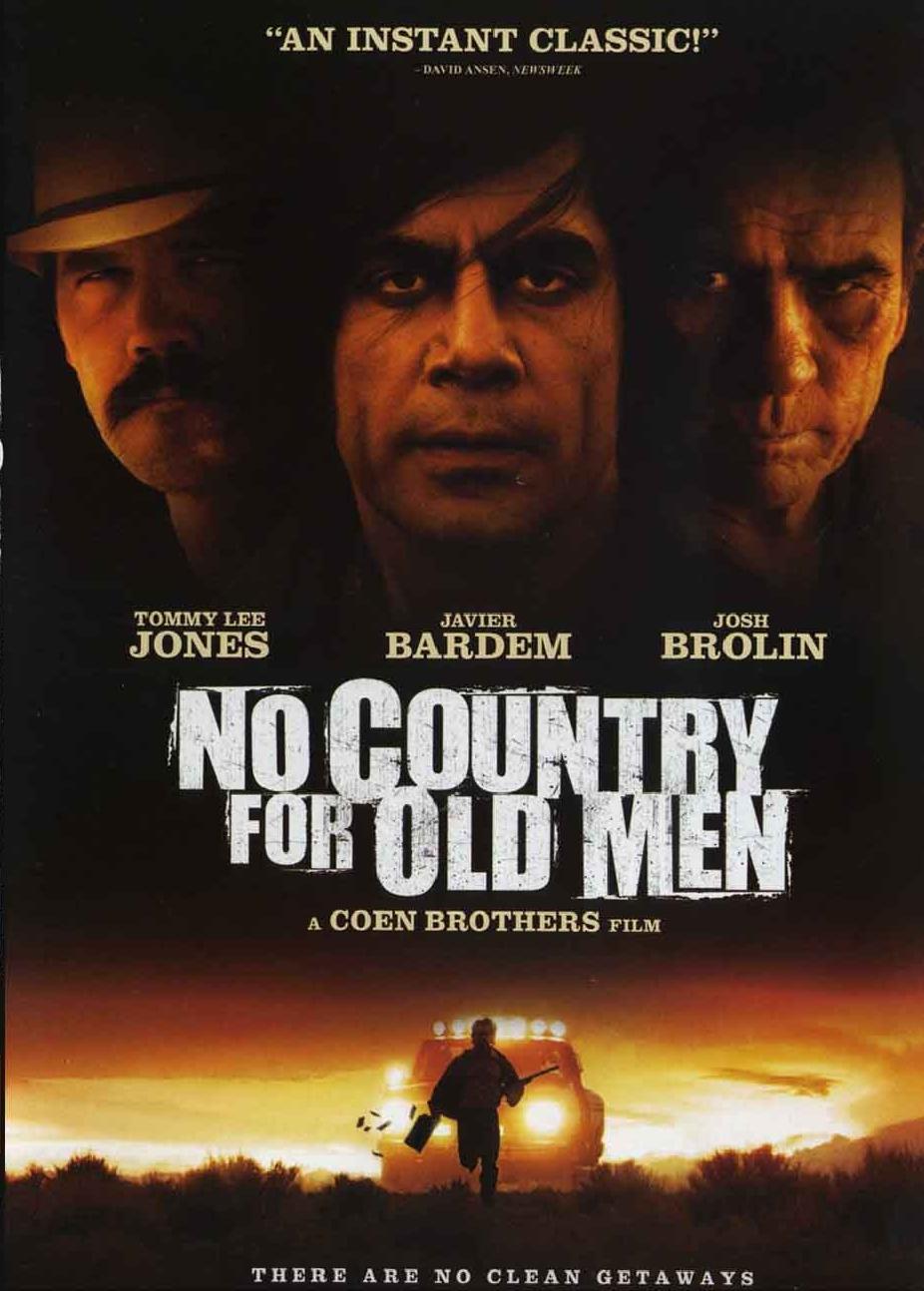
The film is set in 1980's West Texas. Welder and Hunter, Llewelyn Moss, (Josh Brolin), discovers the aftermath of a drug exchange gone violently wrong, as all that remains is the bodies of several drug runners, and $2 million. Rather than report his findings to the police, Moss decides simply to take the money, and leave with his 'treasure'. This then causes Anton Chigurh, (Javier Bardem), to be hot on his trail. Chigurh is no ordinary man, he is a psychopathic killer, who murders almost everyone that gets in his way, whether you're a rival, bystander or an employer, on his pursuit to get his money.
Moss desperately tries to keep one step ahead of the intense and frightening Chigurh. As the chase intensifies the local Sheriff Ed Tom Bell, (Tommy Lee Jones), oversees the investigation even as he struggles to face the sheer enormity of the crimes he is attempting to finish the crimes committed by Chigurh and Moss.
Monday, 17 February 2014
Source Code
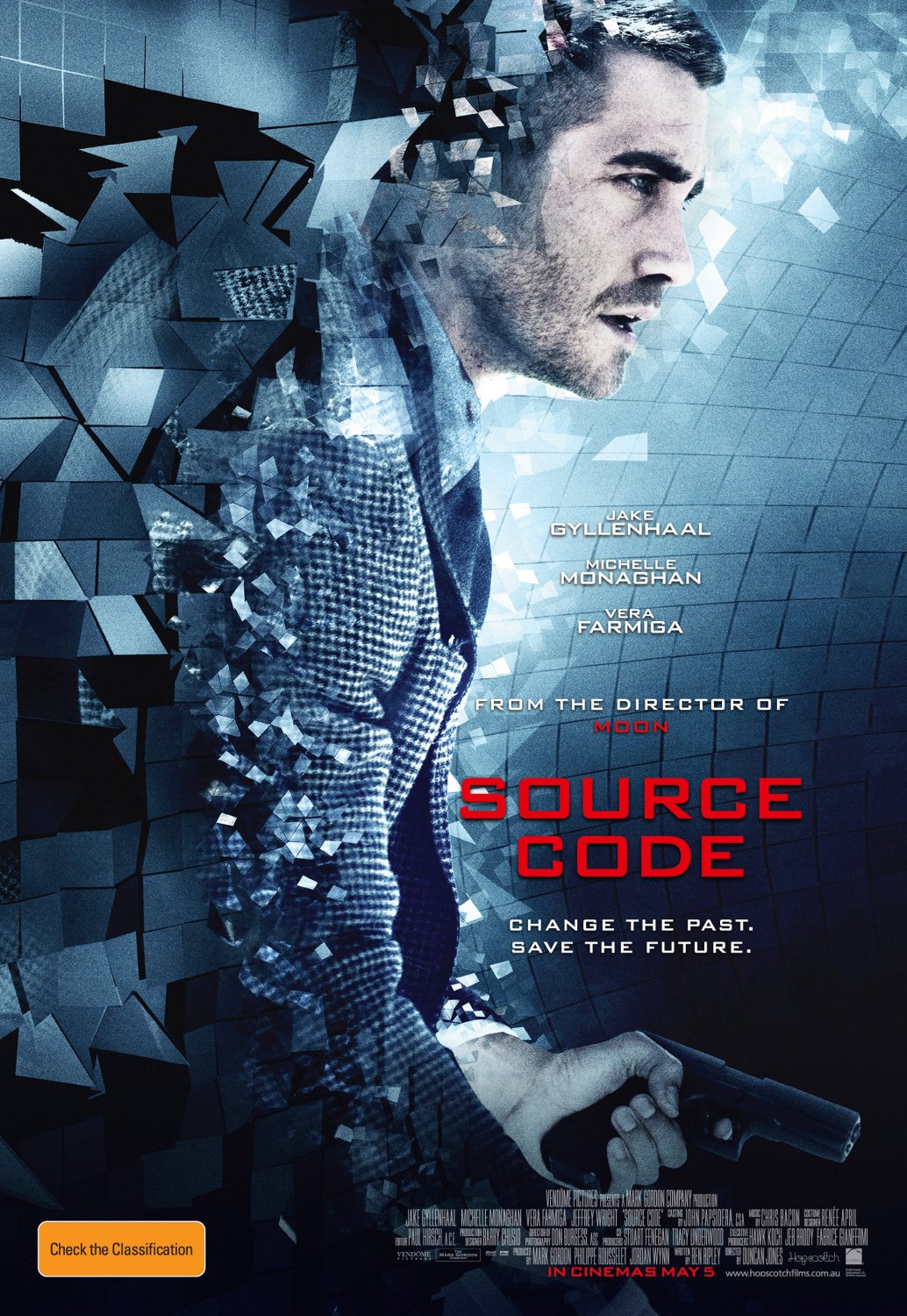
A 2011 Science Fiction Thriller
Colter Stevens, (Jake Gyllenhaal) a US Army Helicopter Pilot, whose last memory is flying in Afghanistan, wakes up on a commuter train, with his 'companion', Christina Warren, (Michelle Monaghan). After discovering that he has assumed the identity of another man, 8 minutes later the train is blown up, and Stevens finds himself in some kind of pod. He then begins talking to someone, Colleen Goodwin, (Vera Farmiga), who tells him he has to go back and find out who the bomber of the train is. Stevens is sent back again, to go through the whole thing again, and attempt to find out who the bomber is, but Stevens fails, and finds himself in the pod again. He is sent back another time, and yet still is unable to find anything out. When he returns to the pod, he asks what is going on, Goodwin and Dr. Rutledge, (Jeffrey Wright), the scientist in charge, tell Stevens he is part of a project that can put someone in another person's consciousness for the last 8 minutes of their life. Stevens then asks why he cannot just stop the bomb, Rutledge then tells Stevens, he is not going back in time but placed in the moment so he can find out who the bomber is and if there are any other potential targets.
Style Of Editing
Style Of Editing
Style of editing is how shots are linked together. Movement between two shots is called transition.
In films there are several transitions commonly used, these are:
Straight Cut is the most commonly used transition, as it is considered 'invisible'. This is when one shot moves instantly to the next without averting the audiences attention to anything else. Straight Cuts helps to retain reality in the film.
Dissolve is when one shot is being faded off screen, whilst another is being faded in. At the mid-point of the dissolve, the audience will be able to both shots. Film makers use dissolves to show that there is a connection between two characters, places, or objects.
Jump Cut is when audience attention is drawn in to focus on something, very suddenly. this occurs when the continuity is broken, this is known as discontinuity editing. By using a jump cut, it appears as if a section has been removed. It is used to startle the viewer, and attract attention to something.
Wipes is when one image is pushed off the screen by another image. It is more common for shots to be pushed off the right hand side, as it gives the audience the impression of time moving consistently forward. However, wipes can occur either left, or right. Wipes are used to signal a movement between different locations, that are occurring at the same time during the film.
Fades are a gradual darkening or lightening of an image, until that image becomes black or white. A shot will fade until only a black, or white screen is visible. Fades can show the passing of time, or can highlight the end of a particular section of the narrative.

An Example of a Jump Cut.
Style of editing is how shots are linked together. Movement between two shots is called transition.
In films there are several transitions commonly used, these are:
- Straight Cut
- Dissolve
- Jump Cut
- Wipes
- Fades
Straight Cut is the most commonly used transition, as it is considered 'invisible'. This is when one shot moves instantly to the next without averting the audiences attention to anything else. Straight Cuts helps to retain reality in the film.
Dissolve is when one shot is being faded off screen, whilst another is being faded in. At the mid-point of the dissolve, the audience will be able to both shots. Film makers use dissolves to show that there is a connection between two characters, places, or objects.
Jump Cut is when audience attention is drawn in to focus on something, very suddenly. this occurs when the continuity is broken, this is known as discontinuity editing. By using a jump cut, it appears as if a section has been removed. It is used to startle the viewer, and attract attention to something.
Wipes is when one image is pushed off the screen by another image. It is more common for shots to be pushed off the right hand side, as it gives the audience the impression of time moving consistently forward. However, wipes can occur either left, or right. Wipes are used to signal a movement between different locations, that are occurring at the same time during the film.
Fades are a gradual darkening or lightening of an image, until that image becomes black or white. A shot will fade until only a black, or white screen is visible. Fades can show the passing of time, or can highlight the end of a particular section of the narrative.
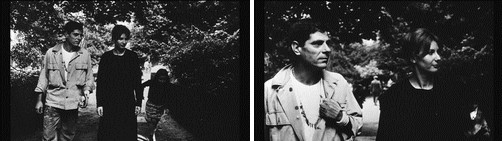
An Example of a Jump Cut.
Speed Of Editing
Speed Of Editing
The Speed of Editing is how long each shot lasts. In films, all shots last a specific amount of time, whether its a few seconds or a few minutes. The speed of editing can make the audience feel specific emotions. For example, if the editing is fast paced, it could make the audience tense or anxious. However, if the editing is much slower, and shots last longer, it can make the audience feel relaxed, or happy.
Throughout films the speed of editing changes, as the start of films tend to be much slower, to enable the audience the ability to understand the story. Although, towards the end of films, the speed of editing is much faster.
The Speed of Editing is how long each shot lasts. In films, all shots last a specific amount of time, whether its a few seconds or a few minutes. The speed of editing can make the audience feel specific emotions. For example, if the editing is fast paced, it could make the audience tense or anxious. However, if the editing is much slower, and shots last longer, it can make the audience feel relaxed, or happy.
Throughout films the speed of editing changes, as the start of films tend to be much slower, to enable the audience the ability to understand the story. Although, towards the end of films, the speed of editing is much faster.
Continuity Editing
Continuity Editing
Continuity Editing is the when films are edited in a coherent and realistic way. This means that the films gives the audience a feeling of time moving forward, realistically, as the narrative will progress in the expected way.
There are several techniques used to show continuity. These are:

Eye-line Match is when we see a character looking at something, that is off screen, and then we cut to a shot of what the character was looking at. For example, Character A is looking at a tree in Shot One, that is off screen and then, in Shot Two, we see this tree.

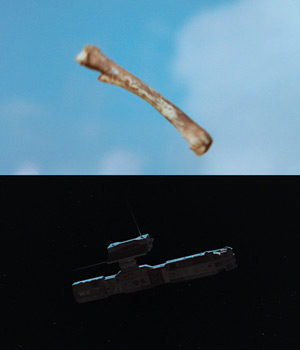
Graphic Match is when two shots are linked with a similar shape or composition. For example, Graphic Match is used in 2001: A Space Odyssey, The Dawn Of Man Scene. This is when the bone is thrown and then it changes to a space satellite.

Continuity Editing is the when films are edited in a coherent and realistic way. This means that the films gives the audience a feeling of time moving forward, realistically, as the narrative will progress in the expected way.
There are several techniques used to show continuity. These are:
- Match-on-action
- Eye-line Match
- Graphic Match
Eye-line Match is when we see a character looking at something, that is off screen, and then we cut to a shot of what the character was looking at. For example, Character A is looking at a tree in Shot One, that is off screen and then, in Shot Two, we see this tree.

Graphic Match is when two shots are linked with a similar shape or composition. For example, Graphic Match is used in 2001: A Space Odyssey, The Dawn Of Man Scene. This is when the bone is thrown and then it changes to a space satellite.
Wednesday, 12 February 2014
Mise-En-Scene
Mise-En-Scene
Mise-En-Scene is a French term, which literally means 'placing of the scene'.
The main elements of Mise-En-Scene are:
~ Setting and Props
~ Costume, Hair and Make-up
~ Facial Expressions and Body Language
~ Lighting
~ Positioning of Characters and Objects in the Frame.
Setting is where the film takes place. For example, a hospital, a farm, a school. Props are the objects that are used in the film, often the props are distinctly associatated with the setting of the film. For example, if the setting was a hospital, the props would typically be hospital bed, medical equipment etc.
Costume are in particular very important to a film, as the audience can instantly recognise a characteristic, or job that character. For example, someone wearing clothing that covers their body, the audience would assume that person is shy, or conservative. Make-up is also important in the look of a character, as it can heavily make a character, like Costume. As well, make-up can with extreme detail can show wounds, or injuries, and even in some cases make actors into Aliens or Inhumane Creatures.
Facial Expressions and Body Language are key in films, as audiences are able to recognise feelings and expressions immediately. For example, if someone is nervous they would shake and their body language would be tight, or if someone is happy they would be free and loose in their movements.
Lighting is important in films, as it can determine a scene before audience members are certain of the scene. Lighting can also show throughout the film, an overall mood, feeling or atmosphere. For example, having key light, make the audience aware of who is the point of focus.
Positioning of the characters and objects, are important because it can give clues to the audience, and can even bring dramatic irony in. For example, if someone is positioned at the top a stairs, and another person at the bottom, could highlight that the person at the top is powerful, or strong, and the person at the bottom, is a weak, and vulnerable. Also, objects in the frame can allow the audience become familiar with the people in the shot.
All these Mise-En-Scene elements are essential in films. :)
The Birds
The Birds
The Birds is a 1963 film directed by Alfred Hitchcock. This film is considered to fit in both the Thriller and Horror genre's, for the film consists of elements of both genre's. For example, at the beginning of the film there is a red herring, something that is common in thrillers. Also, during the film the audience exposed horrific blood, in the Eyes Pecked Out Scene.
The threat that is consistently apparent throughout the film, is a threat from nature. Commonly in Hitchcock's films there is 'no where to hide', which is evident in The Birds, as Bodega Bay, is no where to hide.
The threat that is consistently apparent throughout the film, is a threat from nature. Commonly in Hitchcock's films there is 'no where to hide', which is evident in The Birds, as Bodega Bay, is no where to hide.
Throughout, the film Hitchcock effectively uses camera shots to show the power and dominance the birds possess, and the weakness and vulnerability of the people. For example, in the Children's Birthday Party Scene, Hitchcock, cleverly uses a crane, that almost replicates the birds view, a birds eye view, to show the Children and Adults are the weak prey for the birds. Also, Hitchcock uses a low angle of the birds to show, their almost authority and control they embody, over the Children and Adults.
Sound
Sound
Diagetic Sound - any sound presented, with the origins of the sound clearly shown, and known, i.e. - the characters speech is diagetic, as we can see the source of the sound.
Non-Diagetic Sound - any sound presented, that has come from outside the narrative space, i.e. - sound effects, mood music, or narrators commentary, which is added outside of the narrative.
Parallel Sound - the sound, or music, matches the action, or images, presented on the screen, at a particular point, i.e. - if a murder is about to occur, then the music will be dark, and horrifying, representing the scene.
Contrapuntal Sound - the sound, or music, does not match the action, or images, presented on screen, i.e. - if a murder is about to occur, Beethoven's Symphony Number 5, would not represent the scene particularly closely.
Sound Bridge - this is a sound that crosses over, from one scene to another, often, in Soap Operas like Eastenders, i.e. - the sound of a kettle boiling in a scene in the front room, then a change in scene to the kitchen, where the kettle is boiling.
Saturday, 8 February 2014
Rules And Conventions Of Thrillers
Rules And Conventions Of A Thriller
A Thriller is a range of overlapping sub-genres, which follows specific rules in order to create a specific effect on the audience. Thrillers are typically fast-paced, with regular action, including creative heroes who must stop the more powerful or clever villain.
In many Thrillers the hero is an ordinary person where such extra-ordinary things have happened to them, but they also have to overcome extra-ordinary circumstances. This is becoming more popular in Thriller films, as the audiences like having the ability to relate to the characters situation in the film, as it is more realistic. In Thrillers, the narrative often fixates around crime, and murder, where the theme is of revenge. In which the murdered victim, killed by the antagonist, is close to the protagonist. This is popular fuel for many Thriller films.
Introduction To Thrillers
What Is A Thriller?
Thriller is a broad genre of film, television and literature, that uses suspense, tension and excitement, as it's main elements, to stimulate the audience's moods giving them a high level of anxiety, surprise, terror, anticipation and uncertainty.
Examples Of Thrillers
Thrillers were first introduced in 1928 with 'The Bat', directed by Roland West. As well as 'The Bells' , directed by James Young, and 'The Lodger', directed by Alfred Hitchcock.
More recent examples of Thrillers include titles suc ph as Black Swan, Taken and The Purge.
What Is A Cliffhanger?
A Cliffhanger is an ending to a programme or film that leaves the audience in suspense.
What Is A Red-Herring?
A Red-Herring is something that leads the audience into believing something that is not necessarily true, and leads to a shocking surprise.
Psycho Film Analysis
Psycho
Psycho is an Alfred Hitchcock film that was made in 1960.
The film starts with Marion Crane, an office worker fromPhoenix, who is tired of her life. She wishes to get married to Sam, her lover, but she can't due to insufficient funds. Marion embezzles $40,000 from her boss, and runs away with it. She decides to go to California, but on her way, to see Sam, a storm hits, forcing her stop at a motel, The Bates Motel. The motel is run by Norman Bates, a quiet man, who appears to be controlled by his mother.
The audience, of Psycho, immediately think that the rest of the film will be fixated around the $40,000, and so when Marion gets murdered, it leaves the audience in awe, as they're lead firmly to believe that Marion was the main character, and typically a main character would never be killed a third of a way through the film. The rest of the film the audience are left feeling apprehensive, as they are aware now that anything could happen and anyone could be killed. Also, suspense is built up dramatically because, the audience know there is a murderer in The Bates Motel, however they don't know who it is, when, who or where they'll strike next. Thus causing the audience to be continually on the edge of their seats, and therefore creating a huge amount of tension.
Psycho uses music particularly effectively throughout. The film contains non-diagetic music throughout. The music becomes thrilling and exciting whenever something is going to, or might happen, this allows the audience to be alert and more suspenseful. Also the music creates tension throughout Pyscho. A particular scene when the music is used effectively is when, Marion stopped her car to let people cross the road, and her boss saw her, after telling him she was going home, as she felt unwell. The music added suspense, and made the audience wonder what was going to happen next; Was Marion the Psycho? Was she going to kill her boss?
Three particularly influential scenes in Psycho; The Shower Scene, The Car Scene, and The Staircase Scene.
The Shower Scene is one of the most iconic scenes in cinema history. Psycho has never been considered Hitchcock's best film, but it was the most memorable. Horrors nowadays owe a lot to Psycho, especially the Shower Scene. The Shower Scene is fast paced, with frequent action. In this scene Marion is in the shower, when suddenly the audience see a silhouette appear on the shower curtain, holding a knife. The audience are lead to believe that Marion is the main character, and because of this she will make it out of this situation. As an audience we assume that Marion will survive, but in fact she dies very early, which leaves a big impression on the audience, thus implying that nobody is safe. Then Marion gets stabbed several times. The non-diagetic music helps the audience identify that this scene is going to end badly.
The Car Scene is when Marion is driving, and leaving her old life behind her. Throughout her journey Marion is thinking about what she has left behind, and how her sister, boss and colleagues will react to the news of her departure. In this scene we hear non-diagetic music, which gets louder once we hear everyone talking. This creates a chilling and almost psychotic feeling to the scene, and makes its seem as if something is going to happen, and makes Marion seem much more sinister. This is a red-herring, as nothing comes of what we, as the audience, are thinking.
The Staircase Scene is when the Dectective, Arbogast, is trying to unsurface information on Norman's Mother, Mrs Bates. As Arbogast goes into the house and up the stairs, the camera angle changes, to one where you can see a door opening a someone's silhouette walks out. When Arbogats reaches the top of the staircase, a woman attacks him and stabs, who is presumably Mrs Bates. Arbogast then falls down the stairs, and again, this scene is fast paced. When Arbogast reaches the bottom of the stairs, he his stabbed by the female a numerous amount of times. In this scene the music is chilling and haunting, and sounds similar to the noise of someone dragging their nails down a chalkboard, adding to the build up of fear, and horror.
MacGuffin :)
MacGuffin
A MacGuffin is an object or device used in films, that serves as a trigger for the plot. A MacGuffin doesn't affect the audience, but it does affect the characters. The audience may care for the MacGuffin at first, and they may wonder what's it's for, and why it is obsessed over by the characters, but the audience soon forget about it. To the audience, MacGuffins are seen as meaningless and easily replaceable, but to the characters it is of vital importance, as it drives the story, even ifit was an unimportant object or just mentioned and never seen.
Cinematography
Cinematography
Camera Shots
Wide Shot - the subject takes up all of the frame, or what is, at least, comfortable.
Mid-shot - the subject is shown, in part, but in much more detail.
Close-up - a particular feature, or, part of the subject is shown, and takes up all of the frame.
Extreme close-up - shows extreme detail, of a particular feature, or object.
Over-the-shoulder shot- the subject is seen from over the shoulder of someone else.
Point-of-view shot - shows the subject's view, or perspective.
Camera Movements
Dolly - the camera is mounted on a cart, which travels along tracks, thus creating a smooth, and flowing shot. This is also referred to as a tracking shot, or a trucking shot.
Pan - the camera moves horizontally, from left to right, or right to left.
Tilt - the camera moves vertically, up - down, down - up.
Tracking - this is closely related to Dolly, but tracking specifically stays a constant distance from the action.
Thursday, 6 February 2014
Alfred Hitchcock
Alfred Hitchcock
The Life of a Legend
Alfred Joseph Hitchcock, born 13th August 1899 to parents William and Emma Hitchcock. Hitchcock was an English film director and producer, who pioneered many techniques in the Thriller genre. Throughout his career he made influential films such as North by Northwest, The Birds and Psycho. After having a career spanning half a century, Hitchcock died 29th April 1980, in Bel-Air, Los Angeles. During his life and career, Hitchcock made around 53 films.
Hitchcock's most famous film was 'Psycho', containing one of the most significant pieces of film in cinema history. The iconic shower scene, in which many horrors nowadays owe a lot of their ideas. This was also considered a shocking film because, although it wasn't Hitchcock's best film, Hitchcock killed off his 'main character', Marion, about a third way through the film. The violence of the shower scene, the early death of the heroine, and the many innocent lives destroyed by a disturbed murderer, became Hitchcock's trademark in his films. Hitchcock's films have also been incredibly influential, as many other producers and directors have used his trademark ideas, for their own films.
Hitchcock often used 'MacGuffins", a plot device in the form of some goal, desired object, or other motivator that the protagonist pursues, often with little or no narrative explanation. He also commonly used 'red herrings', which is a plot device that often misleads or distracts from the relevant or important issue.
Alfred Hitchcock is considered one the most influential film directors of all time, and many of his films are still timeless classics.
Hitchcock's most famous film was 'Psycho', containing one of the most significant pieces of film in cinema history. The iconic shower scene, in which many horrors nowadays owe a lot of their ideas. This was also considered a shocking film because, although it wasn't Hitchcock's best film, Hitchcock killed off his 'main character', Marion, about a third way through the film. The violence of the shower scene, the early death of the heroine, and the many innocent lives destroyed by a disturbed murderer, became Hitchcock's trademark in his films. Hitchcock's films have also been incredibly influential, as many other producers and directors have used his trademark ideas, for their own films.
Hitchcock often used 'MacGuffins", a plot device in the form of some goal, desired object, or other motivator that the protagonist pursues, often with little or no narrative explanation. He also commonly used 'red herrings', which is a plot device that often misleads or distracts from the relevant or important issue.
Alfred Hitchcock is considered one the most influential film directors of all time, and many of his films are still timeless classics.
Subscribe to:
Comments (Atom)